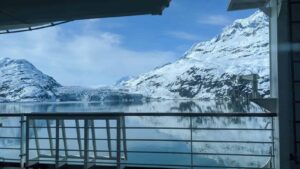
Alaska is one of the rare cruise destinations where the choices you make early don’t just affect comfort — they shape the entire experience.
This isn’t about upgrades or indulgence.
It’s about access.
For many cruise itineraries, an inside or oceanview stateroom works just fine. Alaska is different. Here, the journey itself is the destination. Your ship isn’t simply transportation between ports — it becomes part of the landscape.
Glaciers calving into the sound. Whales surfacing at dawn. Eagles circling misty fjords. These moments don’t wait for shore excursions. They happen while the ship is moving.
And how easily you experience those moments can be influenced by cabin choice.
Alaska Is Visual Travel
Much of what makes an Alaska cruise memorable happens while the ship is underway.
Glaciers, coastal landscapes, changing weather, wildlife, and long stretches of daylight make looking outside part of the experience rather than something reserved for arrival in port.
This matters because Alaska rewards visibility. When the moment happens, having easy access to the scenery can make a meaningful difference.
The cabin is only one part of that decision. Your route, departure port, glacier access, and scenic-cruising opportunities also matter, which is why I look at the entire Alaska Inside Passage cruise experience before recommending a sailing.
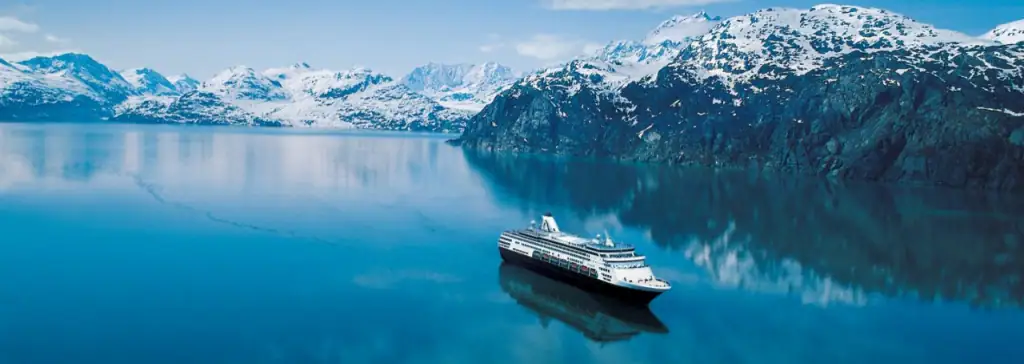
Why Alaska Cruise Cabin Choice Can Change the Experience
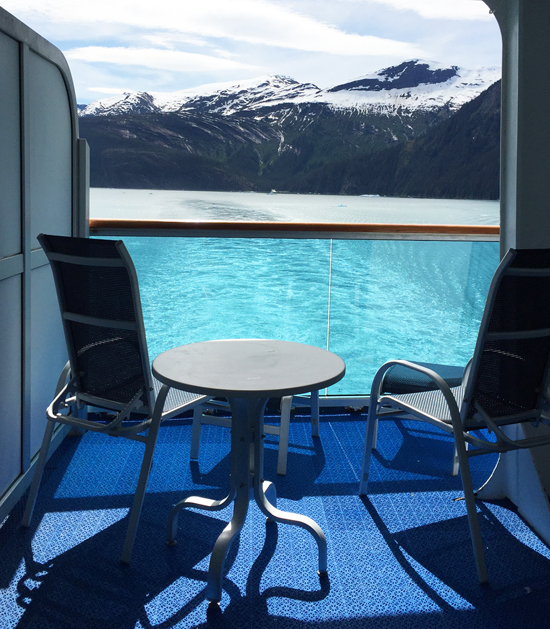
A balcony can give you something particularly useful in Alaska: immediate access to the view without leaving your cabin.
You can step outside early in the morning, watch the coastline while getting ready for the day, or spend time outside during scenic cruising without needing to find space in a public observation area.
That doesn’t mean every traveler needs a balcony. It means the cabin should be chosen based on how you expect to experience the ship and where you want your trip budget to go.
The Story Most Travelers Learn Too Late
This is a situation I see more often than people realize. I’ll call her Maria — not because she’s one specific client, but because she represents a pattern that shows up again and again in Alaska cruise planning.
Maria planned Alaska after it moved from “someday” to “now or never.” She was excited and grateful to have secured a sailing at all. What she didn’t realize was how much had already been decided for her.
She booked late and took what was available: an inside stateroom.
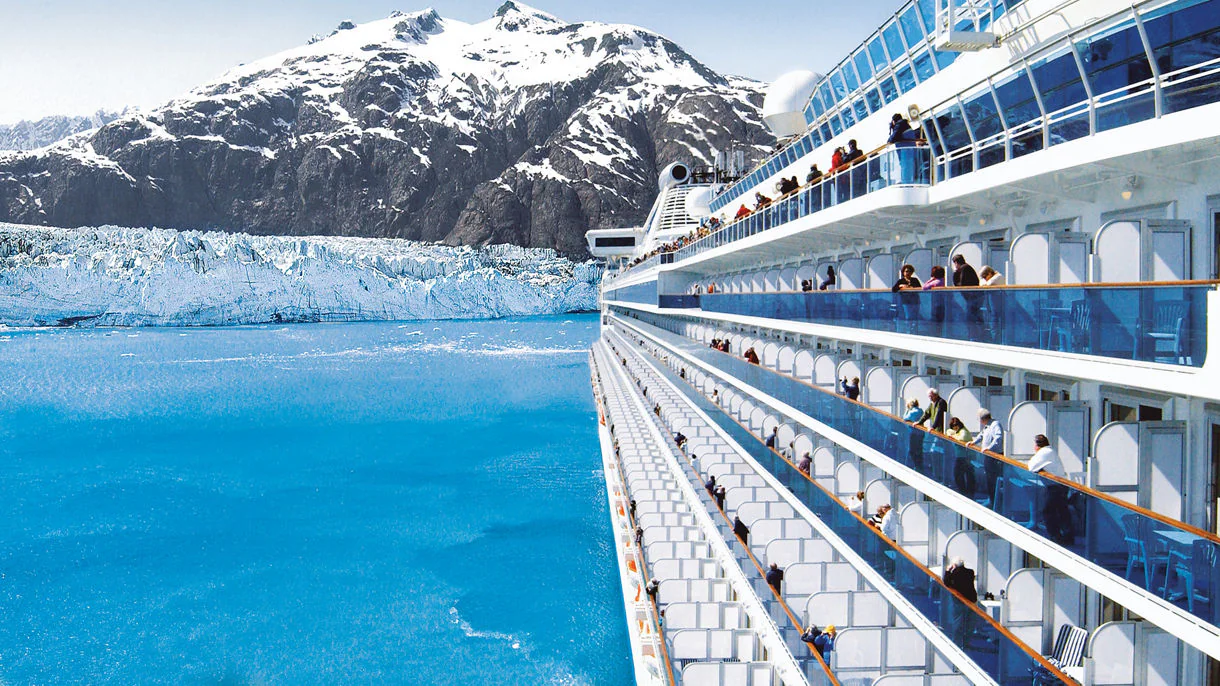
By the second day, the gap became clear. Each morning, other guests stepped onto their balconies with coffee while scenery unfolded outside. Each evening, she heard stories of quiet glacier views at sunset — moments she wished had been easier to experience on her own schedule.
Her trip was good.
It just wasn’t fully what she expected.
That gap between what someone imagines before booking and what the sailing actually delivers is exactly why matching cruise expectations to the actual experience matters before the reservation is made.
When travelers plan earlier, they generally have a wider range of cabin categories and locations to consider. That gives them more opportunity to choose a cabin based on how they actually want to experience Alaska rather than simply taking what remains.
That isn’t about luxury. It’s about access.
Waiting Is a Choice — Even When It Doesn’t Feel Like One
Waiting feels neutral. It feels cautious. It feels like you’re keeping options open.
But in Alaska cruise planning, waiting can also reduce the number of cabin categories, locations, and itineraries available to choose from.
Wildlife sightings can happen during scenic sailing rather than only while you’re in port, which is another reason to think about how and where you want access to outside views.
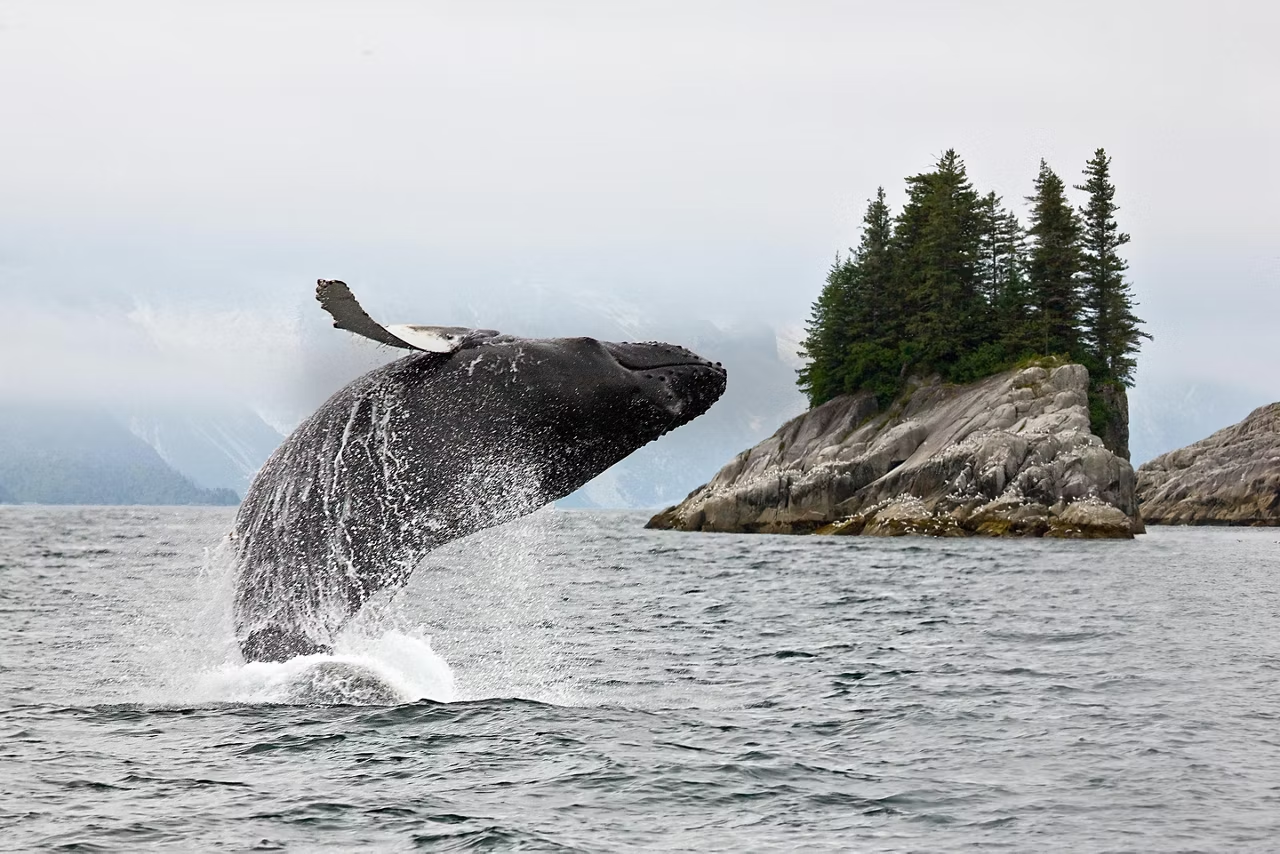
Access can narrow quietly. Once a particular cabin category or location is gone, your choices become whatever remains available for that sailing.
This isn’t about creating urgency for the sake of urgency. It’s about understanding what waiting can change.
Why Planning Early Changes the Outcome
I help travelers avoid the almost great Alaska trip.
That means planning with intention — looking beyond dates and headline pricing to consider cabin placement, ship layout, scenic sailing days, itinerary, and how the experience actually unfolds.
You’re not simply choosing a cabin.
You’re deciding how you want to experience the trip.
If you’re still comparing ships, itineraries, and the kind of onboard experience you want, you can explore the types of cruises I work with before narrowing the trip further.