
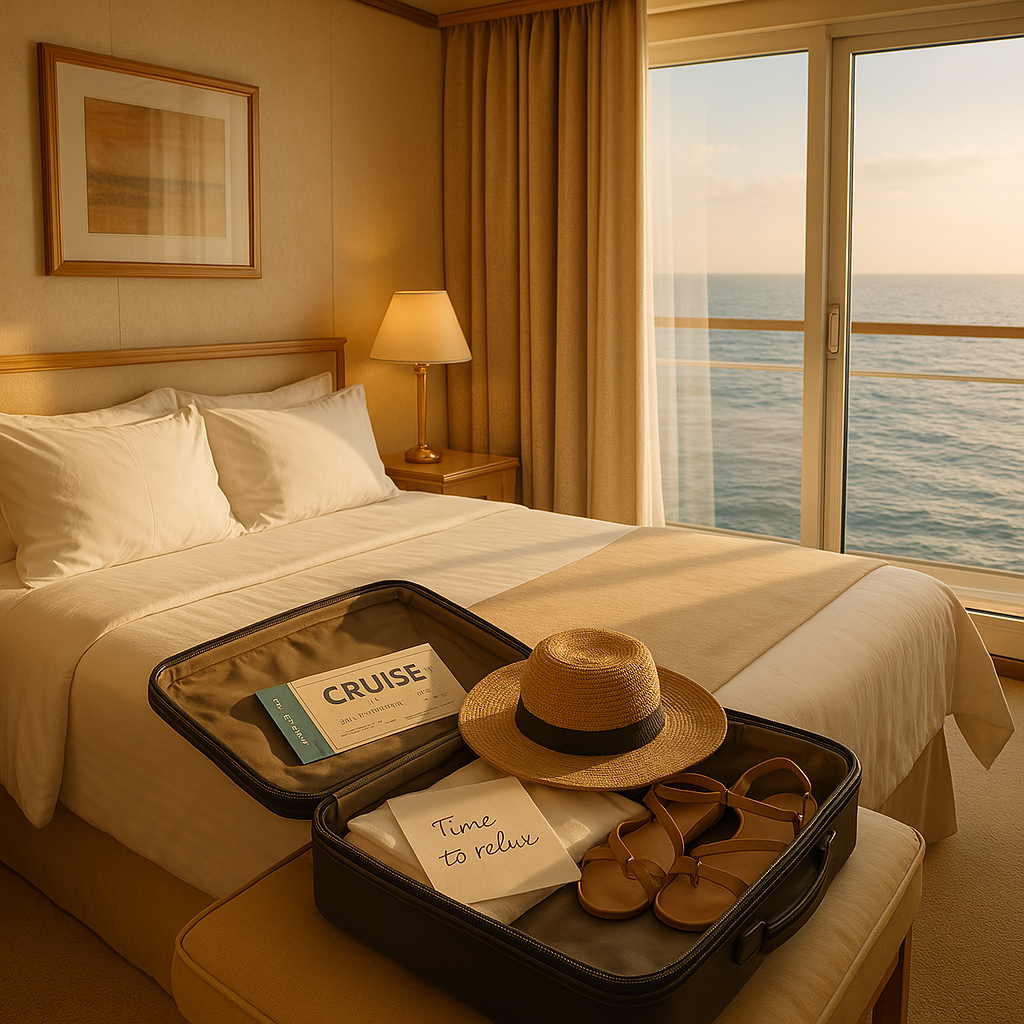
Packing for your first cruise can feel more complicated than packing for a typical vacation. One trip may include travel days, time at sea, different ports, dinners, excursions, pool time, and changing weather.
The goal isn’t to prepare for every possible situation. It’s to bring the things you’ll actually use while accounting for the parts of cruising that are different from a land vacation.
This cruise packing checklist covers the essentials, the useful extras, and a few things first-time cruisers should check before closing the suitcase.
Start Your Cruise Packing Checklist With Travel Documents
Before thinking about clothing or accessories, confirm exactly which travel documents your particular itinerary requires.
Requirements can vary based on your citizenship, departure and arrival ports, itinerary, and the countries you’re visiting. Don’t rely on a general packing list to determine whether you need a passport, passport validity beyond your travel dates, a visa, or another form of identification.
Once you’ve verified the requirements for your trip, organize the documents you’ll need to access easily:
- Required passport or government-issued identification
- Cruise boarding documents and reservation information
- Travel insurance information, if applicable
- Required visas or other destination-specific documents
- Flight, hotel, transfer, and excursion confirmations
- Emergency contact information
- Credit or debit cards and an appropriate amount of cash for your itinerary
Keep essential documents with you while traveling rather than placing them in checked luggage.
Pack a Cruise Carry-On for Your First Day
One of the easiest first-cruise mistakes to avoid is putting everything into the luggage you hand over before boarding.
Your larger bags may not reach your cabin immediately, so keep anything you may need during the first several hours in a carry-on or personal bag.
Consider including:
- Travel documents and identification
- Prescription medications and other essential medication
- Wallet and valuables
- Phone and charging cable
- Swimsuit and cover-up if you plan to use the pool
- A change of clothes or anything needed for the first evening
- Basic toiletries you may want before your luggage arrives
Think of this as the bag that allows your vacation to begin even if your suitcase hasn’t reached your cabin yet.
Choose Cruise Clothing Around the Itinerary
There isn’t one universal cruise wardrobe. A Caribbean sailing, Alaska itinerary, Mediterranean cruise, and expedition voyage can require very different clothing.
Start with the itinerary, expected weather, planned excursions, and your cruise line’s dress guidelines.
Daytime Clothing
- Comfortable casual tops and bottoms
- Lightweight layers appropriate for the destination
- Clothing suitable for planned excursions
- Sun protection where appropriate
Pool and Beach Days
- Swimwear
- Cover-up
- Sandals or appropriate water shoes
- Hat and sunglasses
Bringing a second swimsuit can be useful if you prefer not to put on one that is still damp.
Evening Clothing
Evening dress varies considerably by cruise line. Some ships are very casual, while others designate particular evenings or venues for dressier attire.
Check your cruise line’s current dress guidance rather than packing formal clothing simply because you’re taking a cruise.
Footwear
Shoes take up considerable suitcase space, so choose them according to what you’ll actually be doing.
- Comfortable walking shoes for ports and excursions
- Casual shoes or sandals for onboard use
- Water-friendly footwear when the itinerary calls for it
- Dressier shoes only when you’ll actually wear them
Bring the Toiletries and Personal Items You Rely On
What a ship provides in the cabin varies by cruise line and stateroom category. If a particular product matters to you, bring it rather than assuming it will be supplied onboard.
- Toothbrush, toothpaste, and deodorant
- Preferred hair and skin-care products
- Sunscreen appropriate for your destination
- Lip balm
- Prescription medications
- Any over-the-counter medications you normally rely on
- Motion-sickness remedies if you use them
- Small personal first-aid supplies
Pack enough prescription medication for the trip and consider additional medication for reasonable travel delays when appropriate.
Useful Cruise Accessories Without Overpacking
Cruise packing lists can quickly turn into catalogs of gadgets. Most aren’t essential.
A few practical items may be useful depending on how you travel:
- Small backpack or tote for port days
- Reusable water bottle where permitted
- Portable power bank
- Charging cables for your devices
- Destination-appropriate electrical adapter when needed before or after the cruise
- Waterproof pouch or dry bag for water-based excursions
- Zip-top bags for wet items or organization
- Binoculars for wildlife or scenic itineraries
- Packing cubes if they help you stay organized
Magnetic hooks and organizers can also be useful on some ships, but they’re conveniences rather than necessities.
Check What Your Cruise Line Does Not Allow
This is one of the most important checks to make before packing.
Cruise lines maintain their own prohibited-item policies. Restrictions commonly apply to certain electrical appliances, heating devices, weapons, hazardous materials, and other items that may create a safety risk onboard.
Policies concerning alcohol, beverages, power strips, extension cords, and similar items can also vary by cruise line.
Check your cruise line’s current prohibited-items policy before packing instead of relying on a generic cruise list.
Pack for the Ports, Not Just the Ship
Your itinerary often determines what belongs in the suitcase more than the ship does.
Before leaving home, review:
- Weather forecasts for the embarkation city and ports
- Walking and terrain involved in planned excursions
- Religious or cultural clothing requirements at sites you plan to visit
- Beach, hiking, water, or adventure activities
- Temperature differences between daytime and evening
A traveler heading into Glacier Bay needs a very different packing strategy from someone spending a week in the Caribbean.
Common Cruise Packing Mistakes First-Time Cruisers Can Avoid
- Overpacking. More clothing doesn’t necessarily make the trip easier, especially in a smaller cabin.
- Packing too many shoes. Choose footwear around actual activities rather than every possible occasion.
- Putting medications or documents in checked luggage. Keep essential items with you.
- Forgetting about embarkation day. Your main luggage may not be immediately available after boarding.
- Ignoring the itinerary. Weather, excursions, and port activities should influence what you bring.
- Assuming every cruise line has the same rules. Dress codes, prohibited items, and onboard amenities vary.
Your Final First-Time Cruise Packing Check
Before closing the suitcase, make one final pass:
- Have you verified the travel documents required for your exact itinerary?
- Are medications, identification, and essential documents in your carry-on?
- Have you checked your cruise line’s dress guidance and prohibited-item policy?
- Does your clothing match the expected weather and planned activities?
- Do you have what you’ll need during the first few hours onboard?
- Are you packing anything you probably won’t use?
You don’t need to pack for every possibility to be prepared for your first cruise.
Pack around your itinerary, your activities, and the way you actually travel. That will usually serve you better than trying to fit every item from every cruise packing list into your suitcase.