
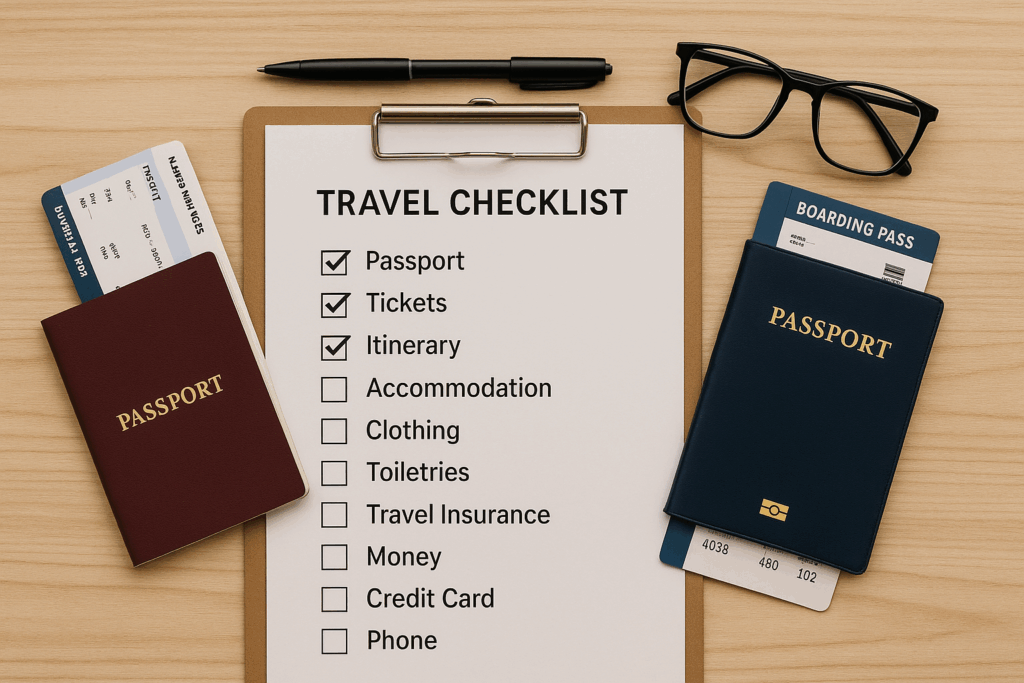
Good travel planning is about more than choosing a destination and making reservations. The decisions that shape a trip are connected: timing affects availability, location affects logistics, pacing affects how the trip feels, and transportation choices can determine how smoothly everything fits together.
Whether you’re planning a cruise, a land vacation, or a trip that combines several destinations, the strongest plans usually begin with the traveler rather than the booking engine.
These ten travel planning tips can help you make those decisions in the right order and build a trip around what actually matters to you.
1. Start With How You Want the Trip to Feel
Before comparing flights, ships, hotels, or resorts, think about the experience you’re trying to create.
Do you want a trip that feels relaxing or active? Do you want to see as much as possible, or would you rather spend more time in fewer places? Is this a celebration, a family trip, a long-awaited destination, or simply time away?
Consider:
- Your preferred travel pace
- The experiences that matter most
- Your realistic budget range
- How much structure versus free time you enjoy
- Who is traveling and what they need from the trip
Those answers give the rest of the planning process a direction.
2. Match the Destination to the Traveler
A destination can be wonderful and still be wrong for a particular trip.
Travel time, climate, mobility, crowds, seasonality, and the type of experiences available all affect whether a destination fits the traveler.
Before deciding where to go, consider:
- Travel time and flight logistics
- Weather during your actual travel dates
- Walking, terrain, and accessibility
- Seasonal closures or limited availability
- Crowd levels and overall atmosphere
- The activities and experiences available
The goal isn’t simply to choose a popular destination. It’s to choose one that supports the kind of trip you want to have.
3. Make Important Decisions While You Still Have Good Options
Planning early doesn’t guarantee the lowest price, and waiting doesn’t automatically mean you’ll pay more.
What timing often changes is the number of choices available.
Depending on the trip, planning earlier may give you more choice among:
- Cruise ships, sailing dates, and cabin categories
- Well-located hotels and preferred room types
- Flight schedules and routing options
- Popular tours and limited-capacity experiences
- Transportation arrangements
The more specific your requirements are, the more important availability can become.
4. Build an Itinerary You Can Actually Enjoy
It is easy to create an itinerary that looks efficient on paper and feels exhausting in real life.
Every hotel change, early departure, transfer, flight, train ride, embarkation, and scheduled tour uses time and energy.
A more realistic itinerary accounts for:
- Travel time between destinations
- Check-in and check-out times
- Meals and breaks
- Jet lag and arrival-day fatigue
- Unstructured time
- Reasonable buffers when timing matters
You don’t need to fill every available hour for a trip to feel worthwhile.
5. Treat Transportation as Part of the Trip
Transportation isn’t simply what happens between the interesting parts of a vacation. Poorly planned connections can affect everything around them.
Look at the complete transportation picture:
- Flight arrival and departure times
- Airport-to-hotel transportation
- Cruise embarkation and disembarkation logistics
- Rail schedules and reservation requirements
- Rental-car requirements and driving conditions
- Regional flights and baggage restrictions
- Connection times and realistic transfer windows
A hotel, cruise, or tour can be a great choice individually and still create a poor overall itinerary if getting to and from it doesn’t work well.
6. Make an Informed Decision About Travel Insurance
Travel insurance is not one-size-fits-all. Whether a particular policy makes sense depends on the trip, the amount of prepaid nonrefundable expense, existing coverage, health considerations, and the risks you want to protect against.
Depending on the policy, coverage may include circumstances involving:
- Trip cancellation or interruption
- Travel delays
- Lost or delayed baggage
- Emergency medical treatment
- Emergency evacuation
Coverage, exclusions, limits, and eligibility requirements vary considerably. Read the policy details rather than assuming every travel insurance plan provides the same protection.
7. Verify Travel Requirements Before Departure
Documentation requirements deserve their own place in the planning process.
Depending on your citizenship and itinerary, you may need to verify:
- Passport requirements and validity
- Visa or electronic travel authorization requirements
- Entry or transit requirements
- Identification requirements for air travel
- Requirements specific to a cruise itinerary or destination
Don’t assume that requirements from a previous trip apply to the next one. Check the rules for your actual itinerary using current official information.
8. Build Some Flexibility Into the Plan
Even a carefully planned trip can encounter weather, transportation delays, schedule changes, or other disruptions.
Preparation doesn’t mean trying to predict every problem. It means avoiding an itinerary so fragile that one small change disrupts everything after it.
Useful precautions can include:
- Keeping accessible copies of important travel information
- Saving essential addresses and contact information
- Allowing appropriate connection and transfer time
- Knowing whom to contact when arrangements change
- Avoiding unnecessarily tight schedules around critical departures
A little margin can make a significant difference when something doesn’t go according to plan.
9. Look Beyond Price When Comparing Travel Options
Price matters, but it doesn’t tell you whether two travel options provide the same experience.
When comparing a cruise, hotel, resort, tour, or transportation provider, look at what is actually included and how the option fits the trip.
Consider:
- Location
- Cancellation and change terms
- What’s included versus additional
- Room or cabin category
- Schedule and itinerary
- Service model
- How the choice connects with the rest of the trip
The least expensive option can be the right one. It simply shouldn’t become the automatic choice without understanding what you’re comparing.
10. Know When Professional Travel Planning Can Help
Not every trip requires professional planning. A straightforward trip that you’re comfortable arranging yourself may be perfectly manageable.
Professional help becomes more useful when the number of moving pieces increases or when you want help evaluating options rather than simply finding them.
That can include trips involving:
- Multiple destinations or transportation arrangements
- Cruise ship, itinerary, and cabin comparisons
- Pre- and post-cruise arrangements
- Milestone celebrations or group travel
- Complex international itineraries
- Travelers with different priorities or requirements
The value isn’t simply having someone make reservations. It’s having the individual pieces considered as one complete trip.
Good Travel Planning Connects the Pieces
A well-planned vacation isn’t defined by how many reservations you make or how much you fit into each day.
It’s the result of making connected decisions: choosing a destination that fits the traveler, building a realistic pace, understanding the logistics, protecting the important parts of the trip, and leaving enough flexibility for travel to still feel like travel.
When those pieces work together, the trip doesn’t just look good on an itinerary. It works in real life.